0
یک سبد خرید شما خالی
شما هیچ موردی در سبد خرید شما

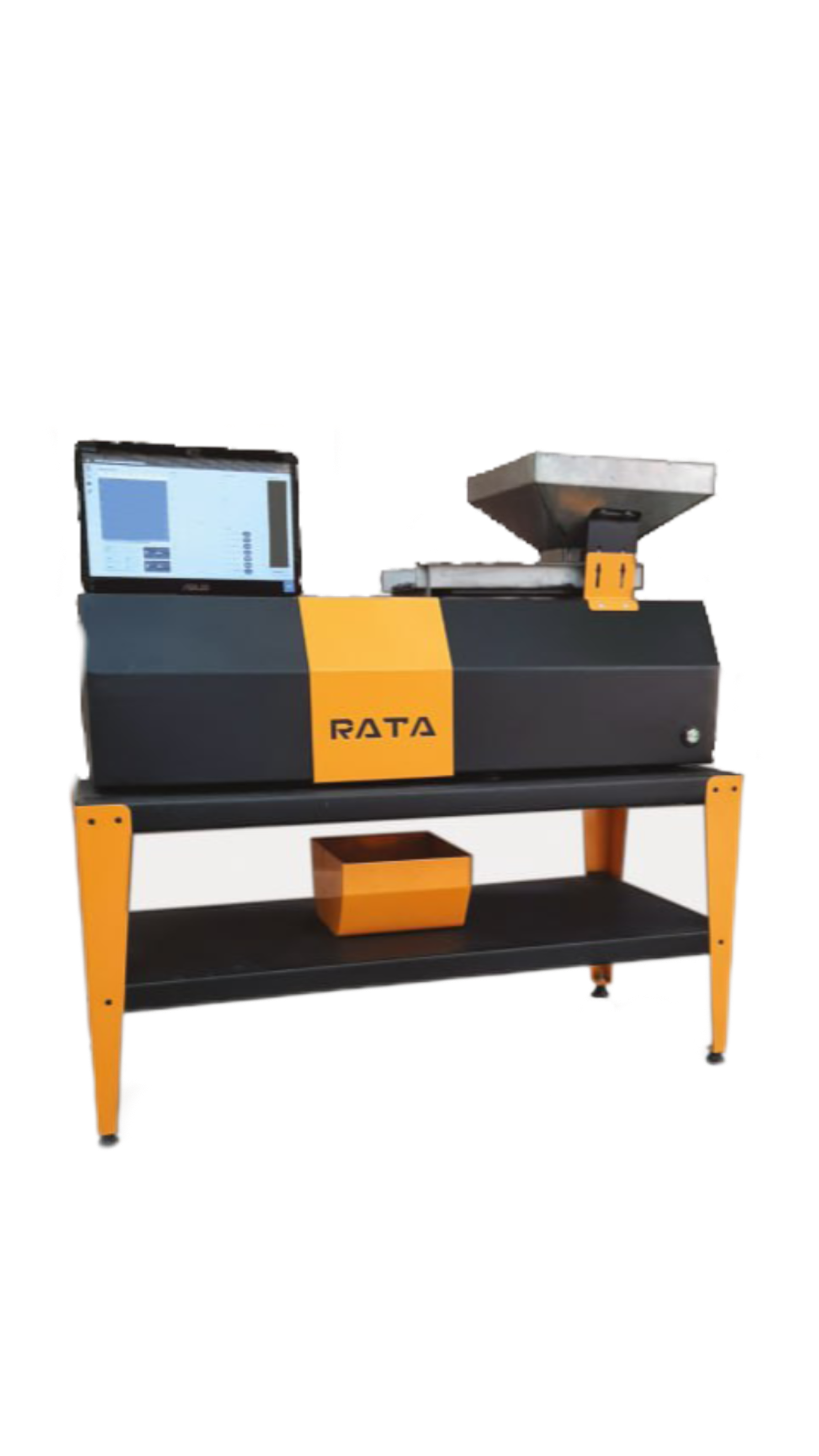
Pelletizing is a common process used in metallurgy, chemical industries, and various other industrial fields. Accurate analysis of pellet morphology and size distribution during the pelletizing process is crucial, as it significantly impacts production efficiency.
If you are still relying on traditional methods for pellet size analysis—which are noisy, prone to human error, and deliver incomplete results—then this product is designed for you.
Methods for Evaluating the Quality of Iron Ore Pellets
Durability Testing Devices
Abrasiveness Index Testing Devices
Sieves for Measuring Dimensions and Classifying Pellets
Disadvantages of the Sieving (Screening) Method:
Pellet Size and Shape Analyzer (RATA Device)
This device calculates the size and shape distribution of different pellet types through image capturing using a line-scan camera during free-fall.
Definition of the Pellet Morphology Analyzer (PMA)
Pellet morphology analysis is based on image processing
Imaging via K4 line-scan camera during free fall of particles
Capability to provide AI-based qualitative analyses in advanced versions
Provides results comparable to sieve-based analysis
Delivers graphical and statistical reports on pellet morphology analysis
Specifications of the Pellet Morphology Analyzer
Very fast analysis
High accuracy
Provides geometric and morphological parameters of pellets with 50-micron resolution
Possibility of achieving higher accuracy by selecting a suitable high-resolution camera
Provides pellet classification results with customizable sieve size selection
Usable for analyzing the morphology of polymer granules and other particles
Pellet Analysis Results and Reports
Reports on geometric and morphological parameters such as: circularity, aspect ratio, concavity, compactness, etc.
Access to statistical information of the calculated parameters
Visualization of the morphology of each measured pellet
Ability to process previously recorded images offline
Access to stored images

نقد و بررسیها
هنوز بررسیای ثبت نشده است.